
Blog posts are loading
Blog posts are loading
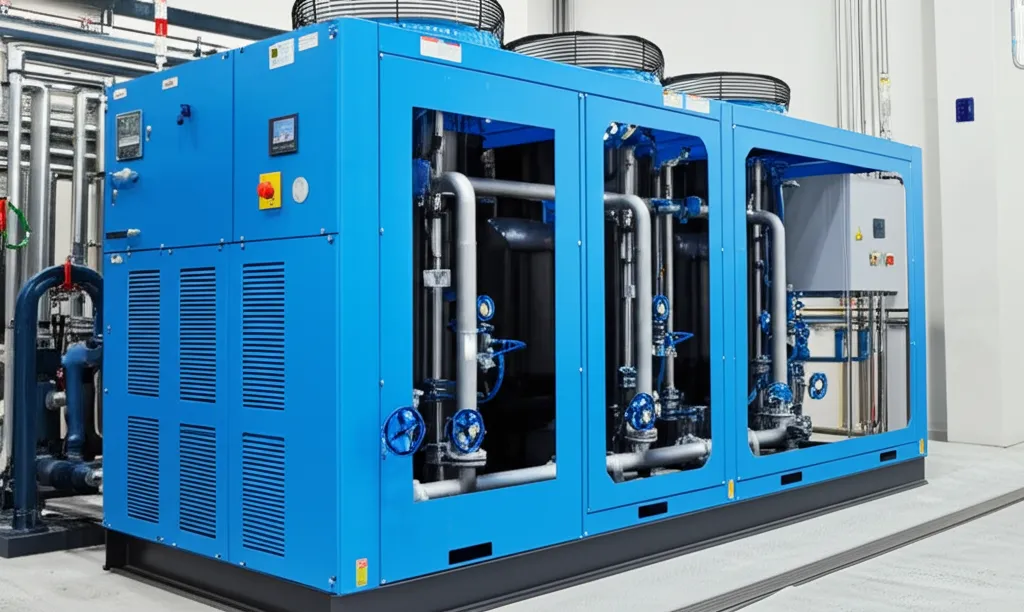
Chillers are essential in many industries for removing heat from liquids to cool machinery, equipment, and even indoor spaces. Learn how they work and their applications.

Chillers are essential in many industries for removing heat from liquids to cool machinery, equipment, and even indoor spaces. These systems help maintain operational efficiency by providing precise temperature control. They are widely used in process cooling to keep industrial processes at optimal temperatures. In this post, we'll explore what industrial chillers are used for, how they operate, their key components, and the broad range of applications and benefits they offer.
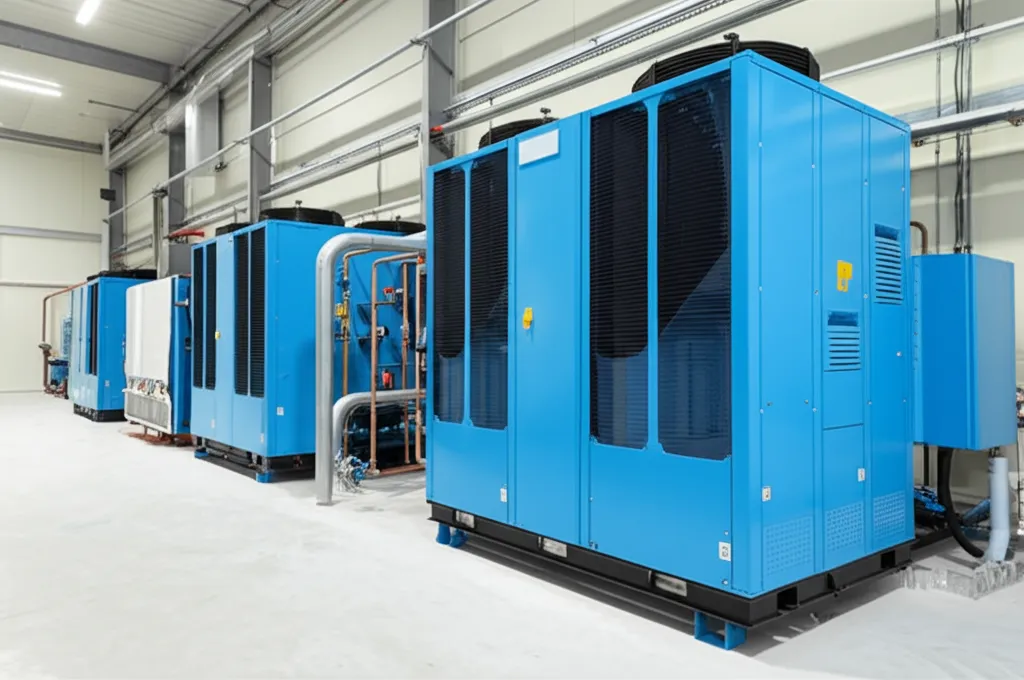
Industrial chillers in operation, highlighting their role in removing heat and cooling processes.
Industrial chillers are sophisticated refrigeration systems designed to cool a liquid, which is then circulated to remove heat from equipment, processes, or ambient air. In other words, an industrial chiller transfers unwanted heat from one place (such as machinery or a process) to another (usually the outside atmosphere). This function is vital for maintaining the efficiency and longevity of equipment and processes.
By keeping temperatures under control, chillers prevent overheating and ensure that machines and processes operate within their optimal temperature range. There are two main types of industrial chillers: air-cooled chillers and water-cooled chillers.
An air-cooled chiller dissipates heat directly into the surrounding air. It typically has fans that blow ambient air over the chiller's condenser coils to carry away heat. Air-cooled units are ideal for facilities where water is scarce or where the chiller can be installed outdoors in a well-ventilated area.
A water-cooled chiller uses water, often in conjunction with a cooling tower, to remove heat. Because water is a better conductor of heat than air, water-cooled chillers are typically more energy-efficient and can handle larger cooling loads, but require additional infrastructure.
Choosing between an air-cooled and a water-cooled chiller depends on the facility's requirements and resources. Air-cooled chillers tend to be preferred in environments with limited water availability or where simplicity is important, whereas water-cooled chillers offer superior performance in high-demand environments if water and extra infrastructure are available.
Understanding the distinction between these two types is crucial for selecting the right system for a given application. It's also important to note that the role of industrial chillers goes beyond just "making things cold." In many industries, maintaining precise temperature control is critical. Stable temperatures ensure consistent product quality and minimize equipment wear.
For example, in the manufacturing sector, chillers keep machinery from overheating, which prevents production defects and reduces downtime due to heat-related equipment failures. In data centers, chillers protect sensitive electronic equipment by removing the excess heat generated, thereby preventing server outages or slowdowns. Thanks to their ability to provide reliable and consistent cooling, industrial chillers are vital for keeping operations running smoothly in a wide variety of settings.
A chiller is essentially a high-capacity refrigeration system designed to remove heat from a liquid coolant via a refrigeration cycle. Most industrial chillers use a vapor-compression cycle (though some may use absorption or adsorption refrigeration methods) to achieve this cooling effect. The primary purpose of a chiller is to cool a fluid or dehumidify air in industrial and commercial environments, effectively lowering the temperature of equipment, products, or indoor spaces that the fluid passes through.
"In summary, whether it's used for air conditioning a skyscraper or cooling an injection molding machine on a factory floor, a chiller's fundamental job is to pull heat out of one area and dump it somewhere else, keeping the target area nice and cool."
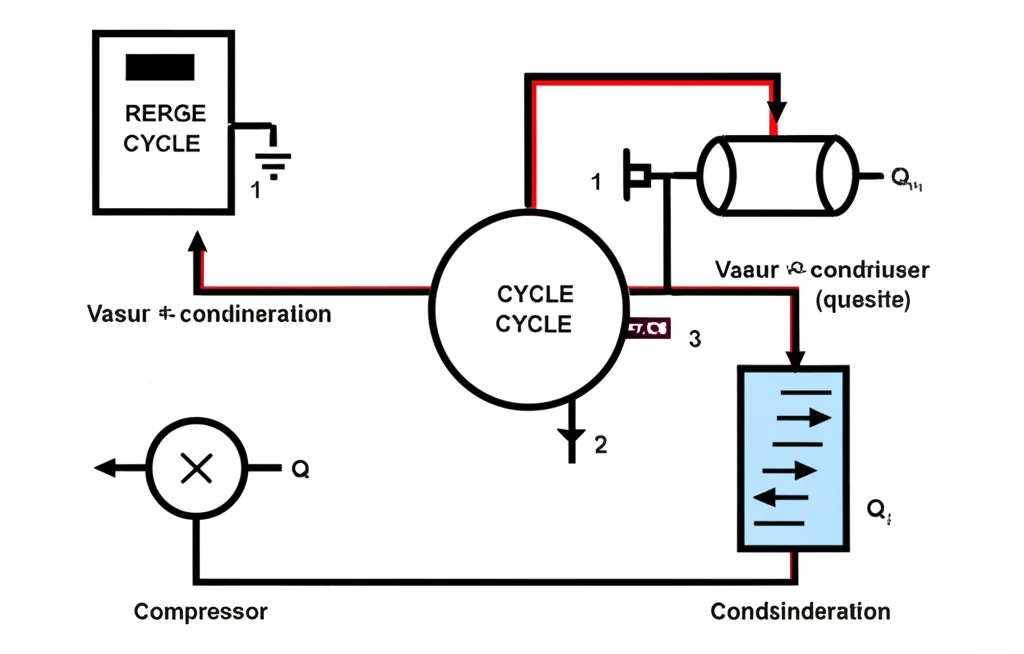
A simplified representation of an industrial chiller's refrigeration cycle with its key components (evaporator, compressor, condenser, and expansion valve).
Industrial chillers operate through a continuous refrigeration cycle – a repeating loop in which heat is absorbed from the process to be cooled and then released to the environment. This cycle involves four main stages corresponding to the chiller's key components. In essence, the chiller uses a refrigerant (a special fluid) that circulates through these components to pick up heat in one place and carry it away to another.
Below are the four main stages of an industrial chiller's operation:
The cycle begins in the evaporator. Here, the liquid refrigerant absorbs heat from the process fluid (for example, water or glycol that is circulating through whatever equipment needs cooling). As the refrigerant absorbs this heat, it evaporates (boils) and turns into a low-pressure gas. In this stage, heat is effectively pulled out of the process fluid, causing that fluid to cool down. The evaporator is thus the component where the chiller "picks up" unwanted heat.
Next, the low-pressure refrigerant gas enters the compressor. The compressor is often referred to as the powerhouse of the chiller because it pumps and pressurizes the refrigerant. It squeezes the refrigerant gas, raising its pressure and, as a result, its temperature. By the time the refrigerant leaves the compressor, it is a hot, high-pressure gas. Compressing the refrigerant is crucial because it prepares the gas to release the heat it absorbed when we move to the next stage.
The hot, pressurized refrigerant gas flows from the compressor into the condenser. In the condenser, the refrigerant releases the heat it carried away from the evaporator. For air-cooled chillers, the condenser is typically a set of coils with fans blowing outside air over them – the air absorbs the heat and carries it away. In water-cooled chillers, the condenser is usually a shell-and-tube exchanger where the refrigerant transfers its heat to a water circuit; the heated water then goes to a cooling tower where the heat is expelled to the atmosphere.
The high-pressure liquid refrigerant then passes through an expansion valve (or expansion device). The expansion valve's job is to rapidly reduce the refrigerant's pressure. When the pressure drops, the refrigerant cools down significantly (this is a basic principle of thermodynamics: lowering the pressure causes the temperature to drop). The now cool, low-pressure refrigerant returns to the evaporator to begin the cycle again. This expansion step ensures that the refrigerant going back into the evaporator is cold enough to absorb more heat, and the whole cycle repeats continuously.
After the expansion valve, the refrigerant is once again a cold liquid ready to enter the evaporator, and the cycle starts over. Through this continuous loop of evaporation (absorbing heat), compression, condensation (releasing heat), and expansion, an industrial chiller steadily pumps out heat from the process or space that needs cooling and dumps that heat elsewhere.
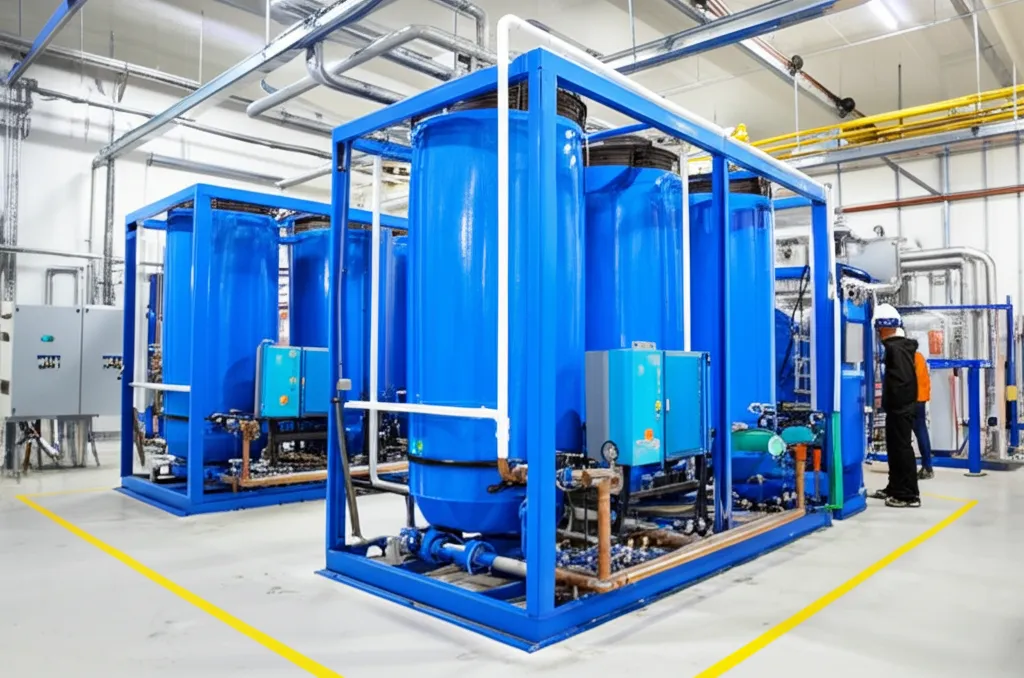
Industrial chiller units are used across many sectors – from food production and storage to data centers and large HVAC systems in buildings.
Industrial chillers are incredibly versatile and find use across a broad range of industries and settings. Any process or facility that generates excess heat and requires cooling is likely to use a chiller. Below are some of the major applications of industrial chillers:
In manufacturing industries (such as metalworking, plastics, automotive, etc.), chillers prevent heavy machinery and process equipment from overheating. This helps maintain consistent product quality and reduces downtime that would occur if machines overheated.
Data centers rely on industrial chillers for cooling critical equipment. Servers produce significant heat, and chillers provide the necessary cooling to keep server racks at safe temperatures, preventing disruptions or damage due to overheating.
Industries like food production, chemical manufacturing, and pharmaceuticals require precise temperature control. Breweries use chillers to control fermentation temperatures, and dairy processors use chillers to quickly cool milk.
Hospitals and labs use chillers to cool imaging equipment like MRI machines and CT scanners. Laboratory chillers may cool samples or equipment for experiments, maintaining the exact conditions needed for medical procedures or research.
One of the most common applications of large chillers is in commercial and institutional HVAC (Heating, Ventilation, and Air Conditioning) systems. In big office buildings, shopping centers, hotels, universities, and even large residential complexes, central chiller plants produce chilled water that is circulated throughout the building for air conditioning. These chillers essentially act as the cooling backbone for climate control, working to keep indoor environments comfortable especially during hot weather. By removing heat from the building's air (via chilled water loops and air handlers), chillers provide efficient large-scale cooling where standard air conditioners would not be practical. This application highlights that industrial chillers are not just for factories — they are also what make modern large buildings habitable in warm climates.
As these examples show, industrial chillers play a critical role anywhere heat needs to be removed reliably and efficiently. From ensuring that manufacturing lines run smoothly, to keeping foods fresh and servers online, to providing comfort in public spaces, chillers underpin many aspects of modern life and industry.
Industrial chillers offer numerous benefits that help improve processes, protect equipment, and save costs. Here are some of the key advantages of using industrial chillers in various applications:
Chillers maintain stable temperatures, which is crucial for processes that require tight thermal regulation. By keeping the temperature consistent, industrial chillers ensure product quality remains uniform and processes run under optimal conditions. For example, in food processing or pharmaceutical production, even slight temperature deviations could ruin a batch of product or cause a safety issue. Chillers eliminate these fluctuations, minimizing the risk of defects and helping products meet strict quality standards every time.
By preventing overheating, chillers significantly reduce wear and tear on equipment. Machinery that runs too hot can suffer from premature component failure, lubrication breakdown, or warping of materials. With a chiller keeping the operating temperature in check, machines experience less thermal stress. This leads to fewer breakdowns, less frequent maintenance needs, and a longer useful life for expensive industrial equipment. In the long run, this saves money by delaying capital expenditures on replacements and reducing repair costs.
Modern industrial chillers are designed with energy-saving technologies that make them much more efficient than older cooling methods. Features like advanced compressors, improved heat exchanger designs, and smart controls allow chillers to provide powerful cooling while using less electricity. Higher efficiency means lower utility bills for the facility. Additionally, efficient chillers have a smaller environmental footprint since they consume less power (and sometimes use eco-friendlier refrigerants). Investing in an energy-efficient chiller can significantly reduce the overall operational costs of cooling-intensive processes.
Refrigeration Specialists
Our technical team consists of experienced professionals with extensive knowledge in industrial cooling systems and refrigeration technology. Dedicated to helping businesses optimize their cooling infrastructure for maximum performance, efficiency, and sustainability.

Discover the latest innovations and strategies for reducing energy consumption in industrial cooling systems while maintaining optimal performance.
Learn essential maintenance practices that can significantly extend the operational life of your cooling equipment and prevent costly breakdowns.
Stay updated with the latest cooling industry news and insights.
Our team of specialists is ready to help you find the perfect chiller solution for your specific needs.